In the rainy season of 2024, Kenya faced an extraordinary challenge: above-average rainfall leading to devastating floods and landslides. On April 24th, in order to protect the dam structure from collapsing, local government authorities overseeing the water reservoirs and dams had to release excessive water storage from the heavy rains. This resulted in heavy downstream flows that left families displaced, homes destroyed, and lives shattered.

Amid this crisis, Medical Ambassadors International urgently appealed for donor support to provide essential relief supplies to flood-affected families in CHE Villages within the Illumanthi Community in Eastern Kenya. Below are just a few stories showing how the generous donations received made a meaningful impact towards helping these families who lost so much.
- Beatrice is a widowed mother of five, a local CHE Champion and a member of the CHE committee. Situated in the lowland near the Illumanthi hills, her house faced a precarious situation. The heavy rains and wind direction caused one wall of her main house to collapse suddenly on the night of April 25th. Miraculously, no one in the family was injured, but their home was now unstable. Urgent action was needed to rebuild and secure it against future disasters. Initially, Beatrice thought that she could make the repairs needed to the wall, floor and roof, but later the remaining parts of the house fell, creating a need to rebuild. The donations given helped in buying building stone, cement and other building materials, so she can have a house that withstands the elements. In addition to the donations from MAI, Beatrice has been able to use some of her savings for the rebuild.
- Pastor Caleb, CHE trainer and staff member with CHE Kenya, worked with Pastor Amos, who is also a CHE trainer and pastor of Tumaini Church, to deliver food and clothes.
- Clothes and a total of 32 food bags containing a balanced diet for each family member for a few weeks, were delivered. Pastor Caleb shared a word of encouragement, as well as challenged them to look up to the God who spared their lives, reminding them that while they lost property, they were alive to tell their stories. Many people expressed their gratitude by saying, “Thank you so much for your help, you are the only ones who have come to help, we have not gotten any help from anyone else.”
- A weekly support group was formed to encourage each other, as well as receive trauma healing sessions. The displaced people were counseled regarding how they will start over now that the government has demolished all the houses within the riparian land. Some of the people relocated, but there remain a few families in the area. Pastor Caleb is helping the families figure out where they will move to, and what kind of livelihood activities they can engage as they rebuild their lives.
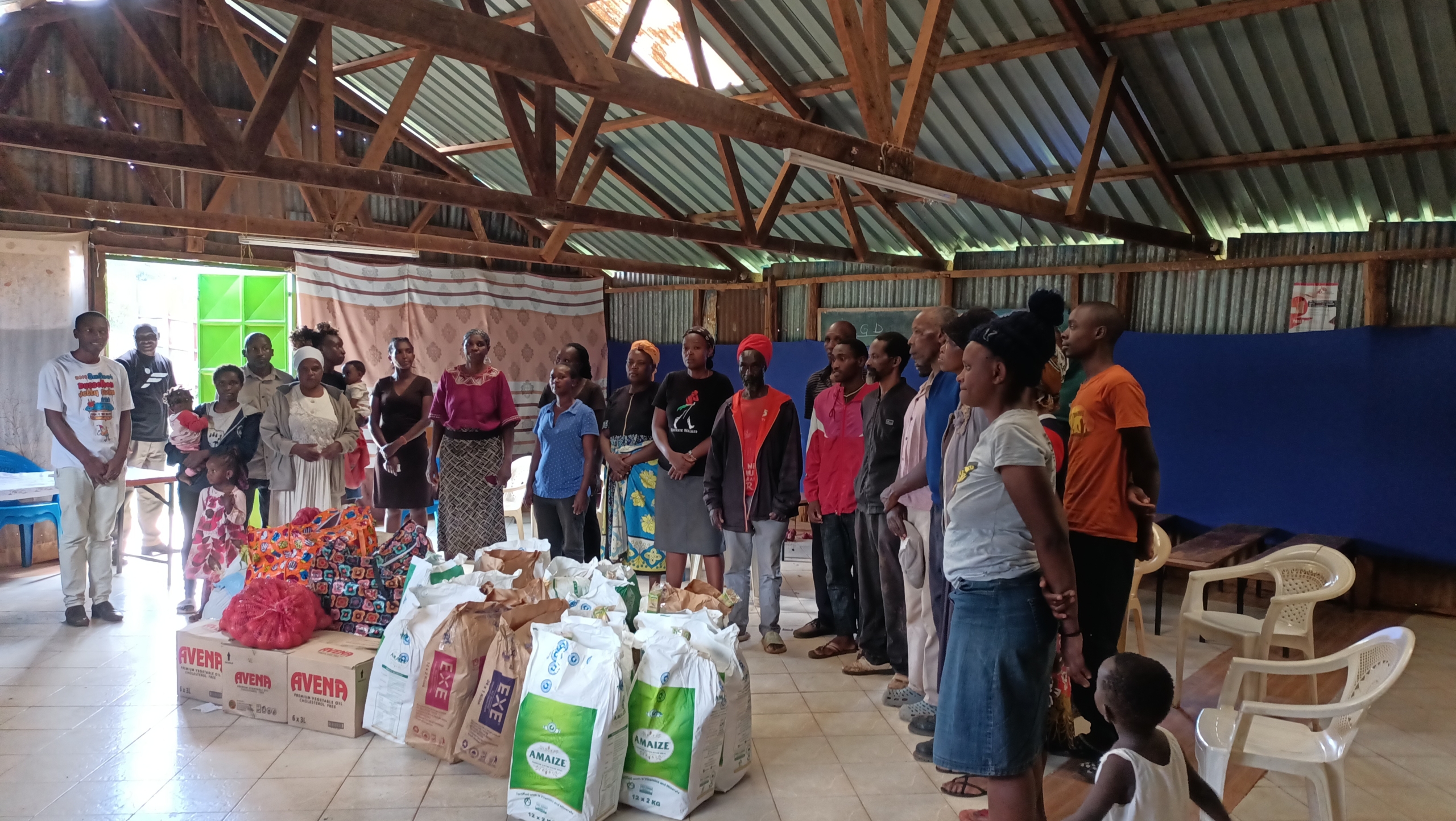
We thank you for being part of Gods restoration story to the Gituamba community. Please continue to pray that the budding relationship between the Tumaini Church and the community will continue to blossom, and God will use it to bring healing and restoration.
The strategy of Community Health Evangelism/Education (CHE) operates on a principle of maximizing available resources within the community to enable it to move towards a sustainable and empowering outcome. Disasters in a community, depending on their intensity, often leave the community with depleted resources in building back a viable survival strategy.
You can continue to support this community and others being impacted by natural disasters and crisis by clicking here.